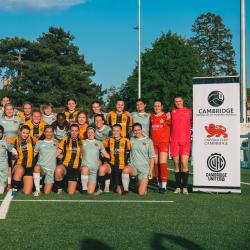
Celebrating Cambridge as the birthplace of modern football
11 May 2026University, football club and city leaders unite to celebrate Cambridge’s football heritage with new partnerships and a new brand identity.

University, football club and city leaders unite to celebrate Cambridge’s football heritage with new partnerships and a new brand identity.
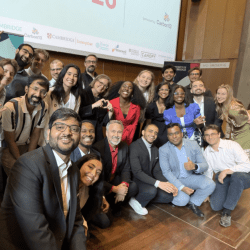
A faith-based climate donation platform and a low-carbon cement innovation took the top prizes at the 2026 Cambridge Climate Challenge.

Children who need life‑saving emergency surgery after a serious injury are almost six times more likely to die if in poorer countries than in wealthier ones, according to an international study led by the University of Cambridge.

First major RCT on evolutionary psychiatry finds mental health clinicians are far more likely to say describing anxiety as an evolved survival response will help patients, compared to genetic ideas taught in training.

Janine Roebuck, a formerly deaf opera singer who regained her hearing thanks to cochlear implants, has described as ‘life changing’ an upcoming Cambridge-led trial in hearing loss.
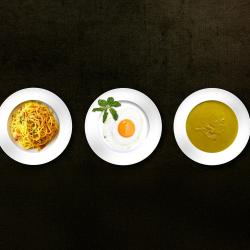
The global food system is more productive than ever, but it's pushing natural systems out of balance in the extreme. Can science help farmers produce the food we need in a more sustainable way?
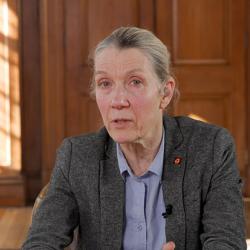
The new Director of the Centre for the Study of Existential Risk warns that a new nuclear arms race may be underway, as more countries consider or seek to expand their arsenals.
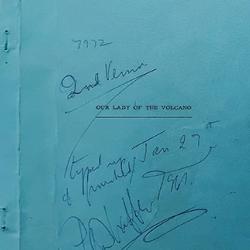
A PhD student at Trinity College has unearthed a complete, unpublished play 65 years after Peter Shaffer wrote it - and before he reignited the world of theatre with the acclaimed plays The Royal Hunt of the Sun, Equus, and Amadeus.
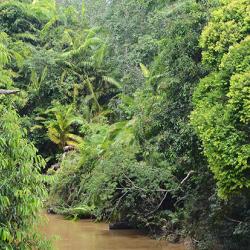
A major analysis led by the University of Cambridge has found that many REDD+ projects achieved meaningful reductions in forest loss - offering real environmental benefits.

Snow cover in the mountains of Greece – an important water source for communities, agriculture and natural ecosystems during the dry summer months – has more than halved over the past four decades, a study has found.

© 2026 University of Cambridge